Every job below is one we do ourselves across Canton.
We frame new decks with footings set below where the ground shifts and joists spaced at 16 inches on center so nothing bounces underfoot. Every ledger board gets flashed before the decking goes down, since that's where most rot starts within five years. We'll walk you through pressure-treated pine, cedar, or composite before we cut anything.
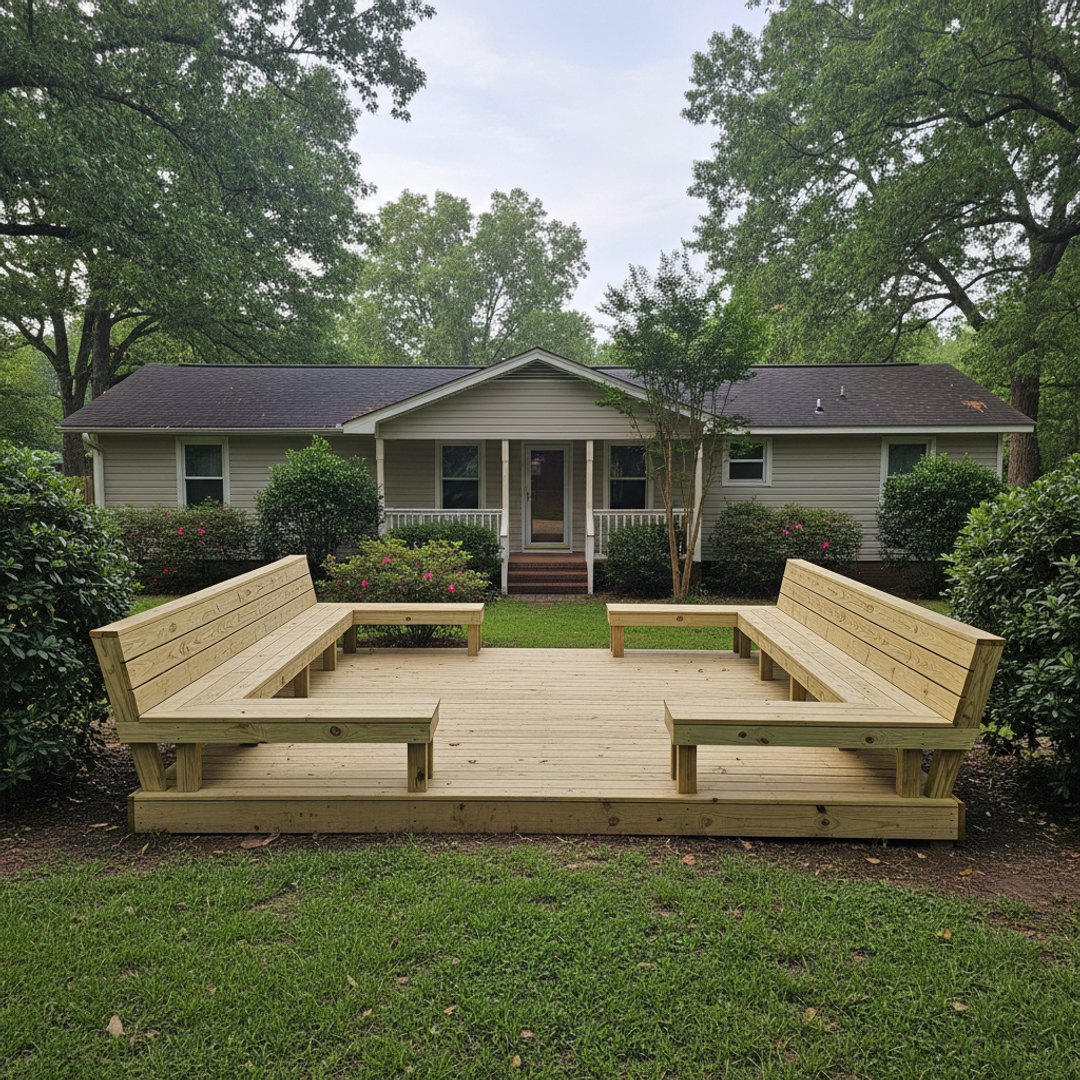
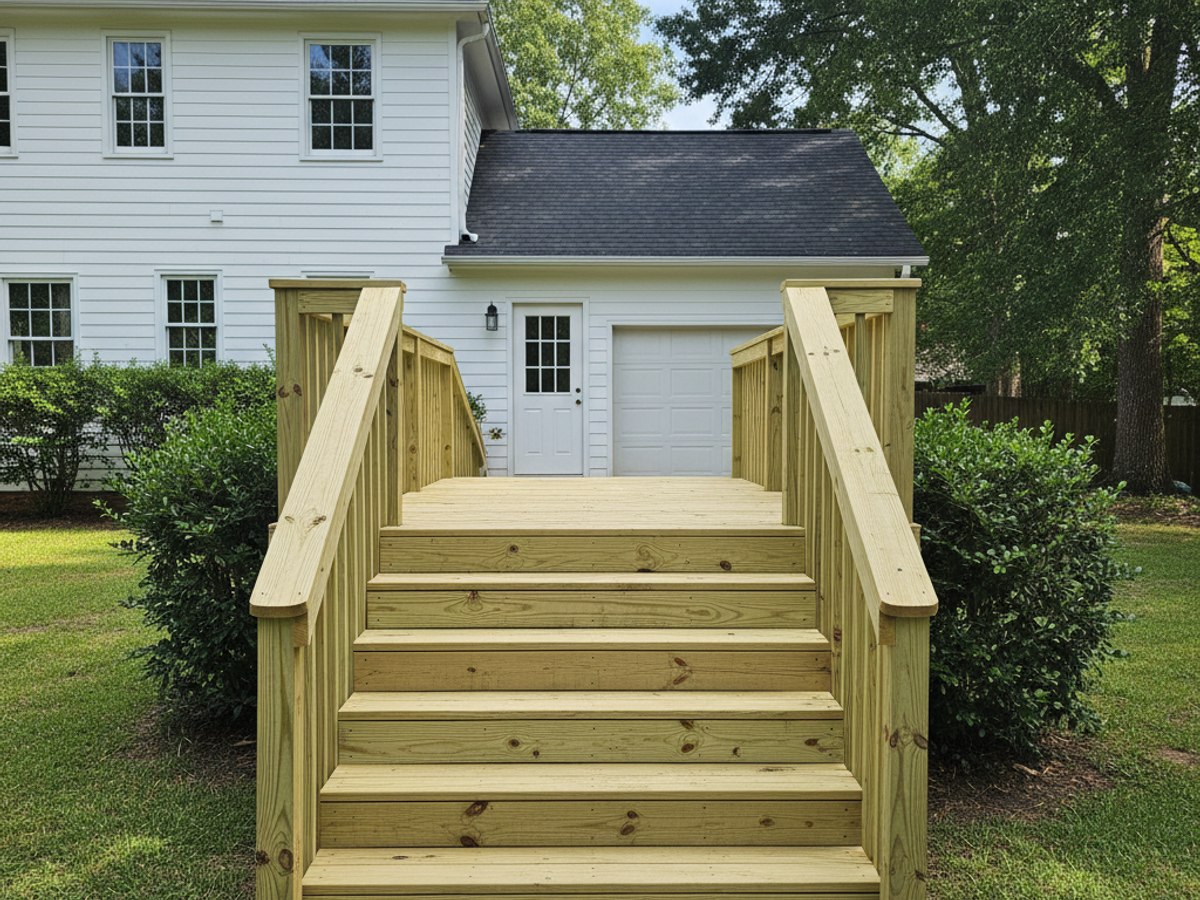
Multi-level decks, built-in benches, and stairs that land where you actually want to walk, that's what this covers. We draw the layout to scale first so you know the square footage and railing run before we order lumber. If your yard slopes, we'll tell you honestly whether a single level or a stepped design makes more sense.
Soft or spongy boards usually mean water's gotten into the end grain, and we replace those boards instead of just flipping them over. Loose railings get re-set into the posts with structural screws, not longer nails driven into the same holes. If a ledger board is pulling away from the house, we re-flash it and re-bolt it into the rim joist.
Mississippi sun and humidity go hard on pressure-treated wood, and an unsealed deck starts graying within a year. We pressure wash first, let the wood dry for a couple of days, then apply a stain and sealer rated for UV and standing water. Composite decking doesn't need this, which is one reason people switch.
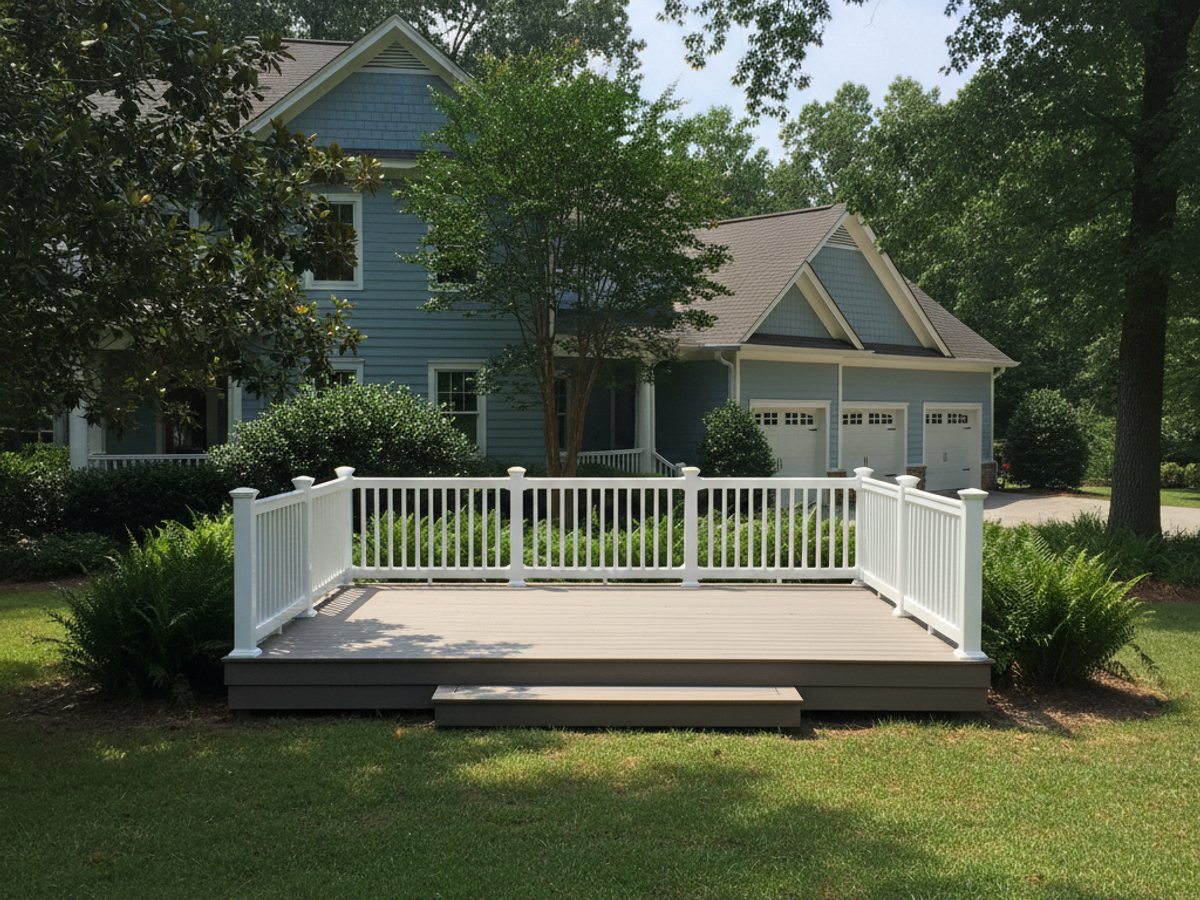
Composite boards don't need staining, but they do need gaps left for expansion in the heat, and hidden fastener systems installed correctly the first time. We build the frame the same way we would for wood, then run composite decking with clips instead of face screws for a cleaner look. It costs more up front and less over the life of the deck.
Code calls for balusters spaced so a 4-inch sphere can't pass through, with posts set no more than 6 feet apart depending on the span. We build railings to that spec so they pass inspection the first time, not the second. Cable rail, wood balusters, or composite, we'll price out whichever fits the deck.
Sometimes it's three boards, not the whole deck, that need to go. We pull the bad ones, match the species and thickness as close as we can, and re-screw the field so the patch doesn't stand out. Weathered pressure-treated wood never matches new lumber exactly, and we'll tell you that up front.
A screened section ties into your existing roofline or gets its own, keeping the mosquitoes off in a way an open deck never will in a Mississippi summer. We frame it to carry roof load, not just deck load, which is a different set of numbers. Screening, doors, and a ceiling fan box are all part of this.
Old decks built before current code often have footings that are too shallow or ledger boards that were never flashed at all. We tear out what's failing, check what's still sound, and rebuild to a spec that'll pass today's inspection. Sometimes the frame is fine and it's just the decking on top that's shot, and we'll tell you that instead of selling a full rebuild.
Decking around a pool takes more abuse from standing water and bare feet than anywhere else on the property. We use composite or a wood species that handles constant wet-dry cycling, with board spacing wide enough to drain fast. Footings go in clear of the pool's plumbing and structure, which takes planning before we dig.
Four steps, and no surprises in any of them.
You tell us what you want doing, we look at what is actually there, and we ask the awkward questions early.
In writing, itemised, free. If something might add cost later we flag it now rather than at the end.
Same crew throughout. We cover your floors, keep the dust down and tidy up before we leave each day.
You point out anything you are not happy with and we fix it before the invoice, not after.
Deck work outside this list? Ask, we may still cover it.
Questions that come up once a deck project actually starts.
Describe the problem and we will tell you what it probably is. No obligation.